

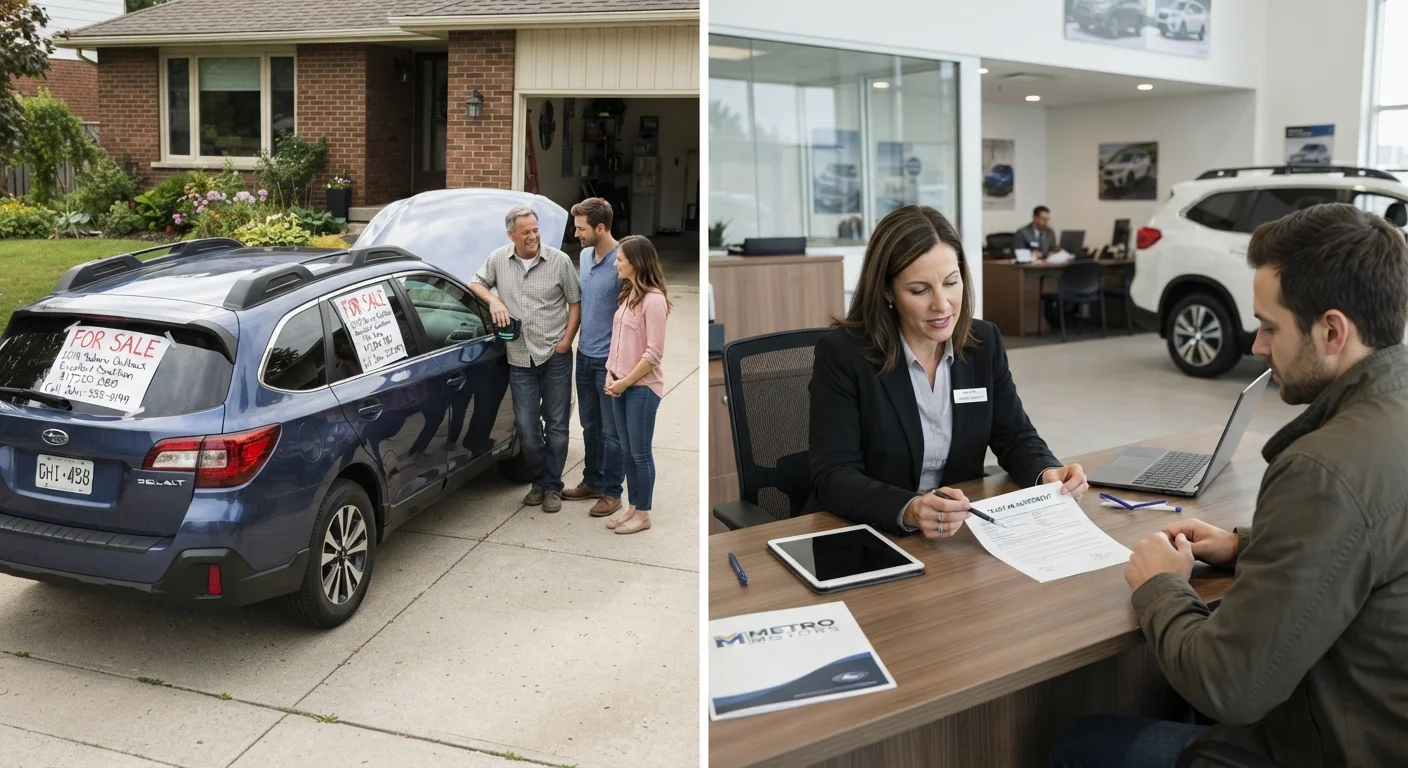
Key Takeaways
- Private sales typically yield $1,000-$3,000 more than dealer trade-ins for the same vehicle.
- Trade-ins can reduce the taxable purchase price of your next car in most US states.
- Selling privately requires more time, paperwork, and direct buyer interaction.
- Trade-in values vary widely between dealerships - always get multiple quotes.
- Neither option is universally better; the right choice depends on your priorities.
Higher sale price in most cases
Private buyers generally pay closer to retail market value, with the gap over trade-in offers typically ranging from $1,000 to $3,000 depending on vehicle type and condition.
Full control over price and timing
You set the asking price, choose when to negotiate, and aren't pressured into a quick decision by a dealer's timeline or desk manager.
No obligation to buy from the same seller
Unlike a trade-in, which ties you to that dealership's inventory, a private sale lets you shop for your next vehicle entirely separately and independently.
Wider pool of potential buyers
Online marketplaces reach buyers across a broad geographic area, which is especially useful for unusual or specialty vehicles that a local dealer may undervalue.
More time and effort required
Creating listings, responding to inquiries, scheduling viewings, and completing paperwork can consume several hours per week over multiple weeks before a sale closes.
No trade-in sales tax offset
In most states, trading in reduces your taxable purchase price on the next vehicle - a benefit worth hundreds of dollars that a private sale cannot replicate.
Payment and safety risks
Verifying payment security and meeting unknown buyers introduces logistical and personal safety considerations that dealer transactions eliminate entirely.
Deals can fall through late in the process
Buyers may back out after inspections or financing issues, leaving you to restart the process - a particularly frustrating outcome when you've already committed to purchasing a replacement vehicle.
Our Verdict
Private sales generally put more money in your pocket, but trade-ins offer genuine convenience and can carry a tax advantage that narrows the gap in many states. The true financial difference is real but often smaller than sellers expect once time, advertising costs, and tax savings are factored in.
Sellers who have the time, patience, and comfort to handle buyer inquiries and paperwork will typically benefit most from a private sale; those prioritizing speed and simplicity may find a trade-in the more practical choice.
The Price Gap: What the Numbers Actually Look Like
The most cited reason to sell privately is the price difference. Dealer trade-in offers are typically discounted because the dealership needs room to recondition the vehicle, carry inventory costs, and earn a margin on resale. Industry pricing guides such as Kelley Blue Book and J.D. Power generally show a gap of $1,000 to $3,000 - sometimes more on higher-value vehicles - between private-party value and trade-in value for the same car in the same condition.
However, that gap isn't always as wide as it appears. Competing dealerships and third-party vehicle buying services have created a more competitive market for trade-ins. Getting quotes from multiple dealers - including franchise stores, independent lots, and direct-buy services - can push an offer meaningfully higher. The gap between a lazy first offer and a competitive one can itself run into the hundreds of dollars.
For context on how vehicle value fits into the broader picture of what you'll spend and recover over a car's lifetime, see our breakdown of true ownership costs.
$1,000-$3,000
Typical private-sale premium over trade-in
Kelley Blue Book and J.D. Power pricing guides consistently show this range between private-party and trade-in values for the same vehicle in equivalent condition.
2-6 weeks
Typical time to complete a private sale
Industry observers note that average private-sale timelines vary significantly by vehicle desirability, price point, and how aggressively the seller markets the listing.
The Trade-In Tax Advantage Most Sellers Overlook
In most US states, when you trade in a vehicle at a dealership and purchase another, the trade-in value is subtracted from the purchase price before sales tax is calculated. On a $25,000 new vehicle with a $10,000 trade-in, you'd pay sales tax only on $15,000 rather than the full amount. At a 7% tax rate, that's a $700 difference - real money that reduces the effective gap between private-sale and trade-in proceeds.
The exact rules vary by state; a handful of states cap the trade-in credit or apply it differently, so it's worth confirming your state's policy before assuming the full offset applies. This benefit disappears entirely in a private sale, where the seller receives the full amount but the buyer pays tax on the full purchase price independently.
State Tax Rules Vary - Verify Before You Decide
Most US states offer a sales tax credit on trade-ins, but the rules differ. Some states cap the deductible amount; a small number apply different formulas entirely. Before factoring the tax benefit into your decision, check your state's department of motor vehicles or revenue agency for the current policy. A licensed tax professional can also help you model the real-dollar impact in your specific situation.
Time, Effort, and the Hidden Costs of Selling Privately
A private sale demands genuine effort. You'll need to price the vehicle accurately, prepare it for showing, list it across multiple platforms (many of which charge listing fees), field inquiries, schedule test drives, and handle the title transfer and bill of sale yourself. From listing to completed sale, the process commonly takes two to six weeks - longer for high-mileage or less common vehicles.
There are also practical risks: meeting strangers, accepting payment securely, and understanding your liability obligations after the sale. Buyers may request a pre-purchase inspection by a mechanic, and some deals fall through late in the process.
If you're simultaneously purchasing a replacement vehicle, the logistics become more complex - coordinating two transactions independently. A trade-in folds both into a single dealer visit. For a fuller picture of navigating both sides of the ownership cycle, our complete ownership overview covers the process end to end.
Higher sale price in most cases
Private buyers generally pay closer to retail market value, with the gap over trade-in offers typically ranging from $1,000 to $3,000 depending on vehicle type and condition.
Full control over price and timing
You set the asking price, choose when to negotiate, and aren't pressured into a quick decision by a dealer's timeline or desk manager.
No obligation to buy from the same seller
Unlike a trade-in, which ties you to that dealership's inventory, a private sale lets you shop for your next vehicle entirely separately and independently.
Wider pool of potential buyers
Online marketplaces reach buyers across a broad geographic area, which is especially useful for unusual or specialty vehicles that a local dealer may undervalue.
Making the Right Call for Your Situation
The financially optimal choice depends on your vehicle's value, your state's tax rules, and how much your time is worth. A rough framework: calculate the realistic private-party value, subtract the trade-in offer, then subtract the tax savings a trade-in would generate on your next purchase. What remains is the true incremental gain from selling privately - weighed against hours spent and the friction involved.
For vehicles in excellent condition with broad appeal, the private-sale premium is often worth capturing. For older vehicles, those needing work, or sellers with limited time, the trade-in path frequently makes more practical sense.
Whichever route you take, having solid documentation helps - particularly a clean vehicle history report. Understanding what a vehicle history report contains can also help you anticipate buyer questions and price your car with confidence.
More time and effort required
Creating listings, responding to inquiries, scheduling viewings, and completing paperwork can consume several hours per week over multiple weeks before a sale closes.
No trade-in sales tax offset
In most states, trading in reduces your taxable purchase price on the next vehicle - a benefit worth hundreds of dollars that a private sale cannot replicate.
Payment and safety risks
Verifying payment security and meeting unknown buyers introduces logistical and personal safety considerations that dealer transactions eliminate entirely.
Deals can fall through late in the process
Buyers may back out after inspections or financing issues, leaving you to restart the process - a particularly frustrating outcome when you've already committed to purchasing a replacement vehicle.